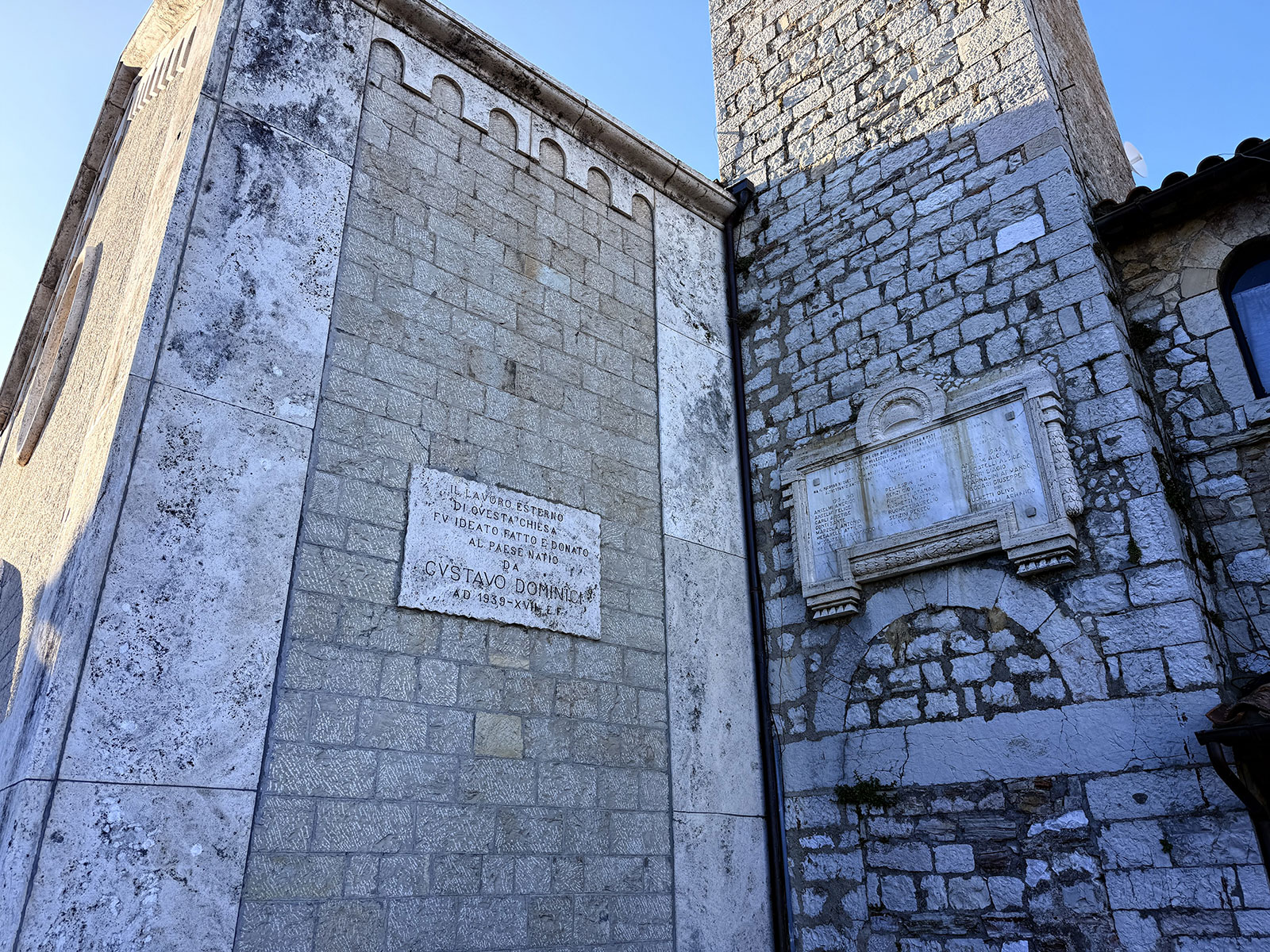
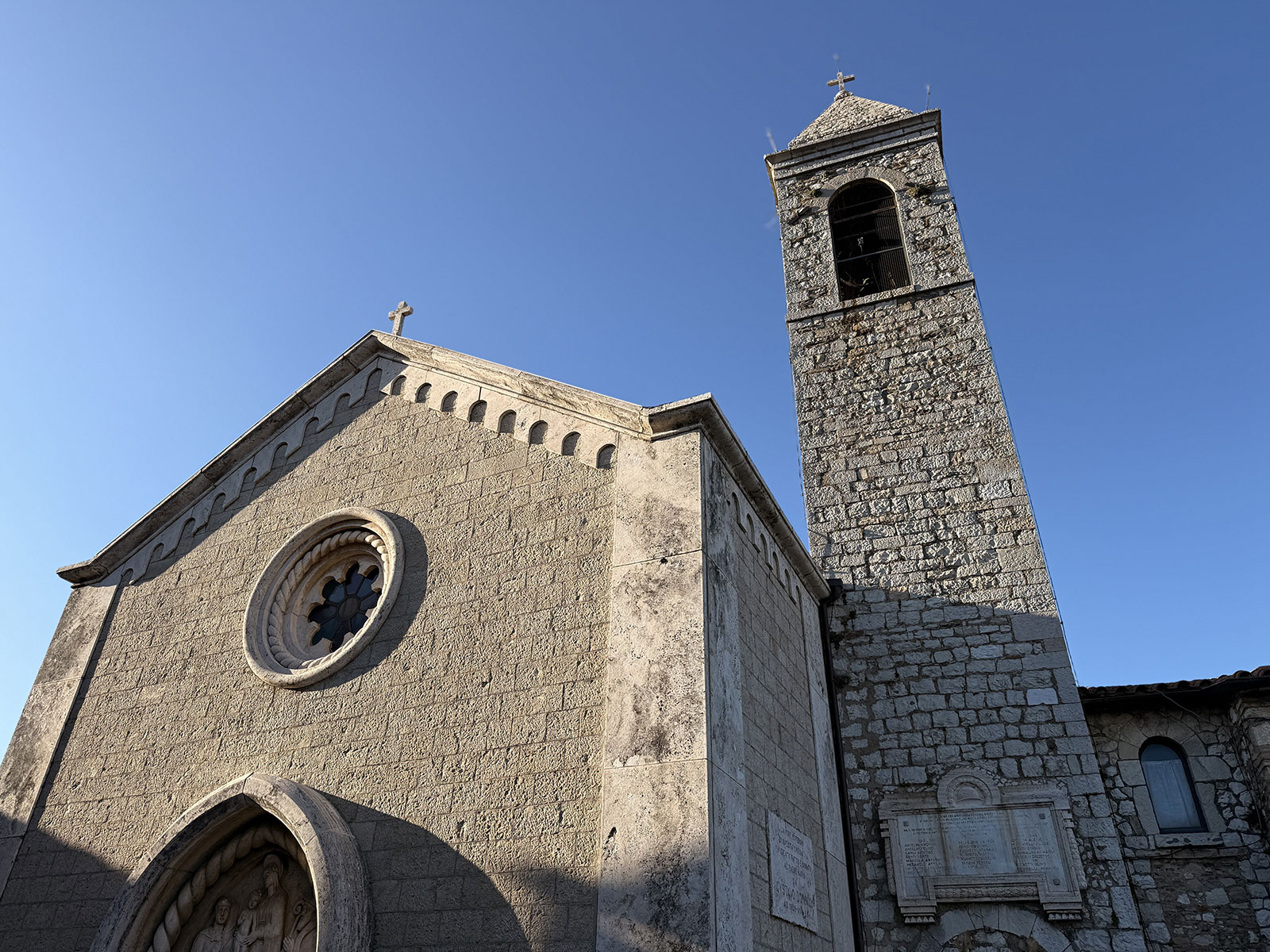
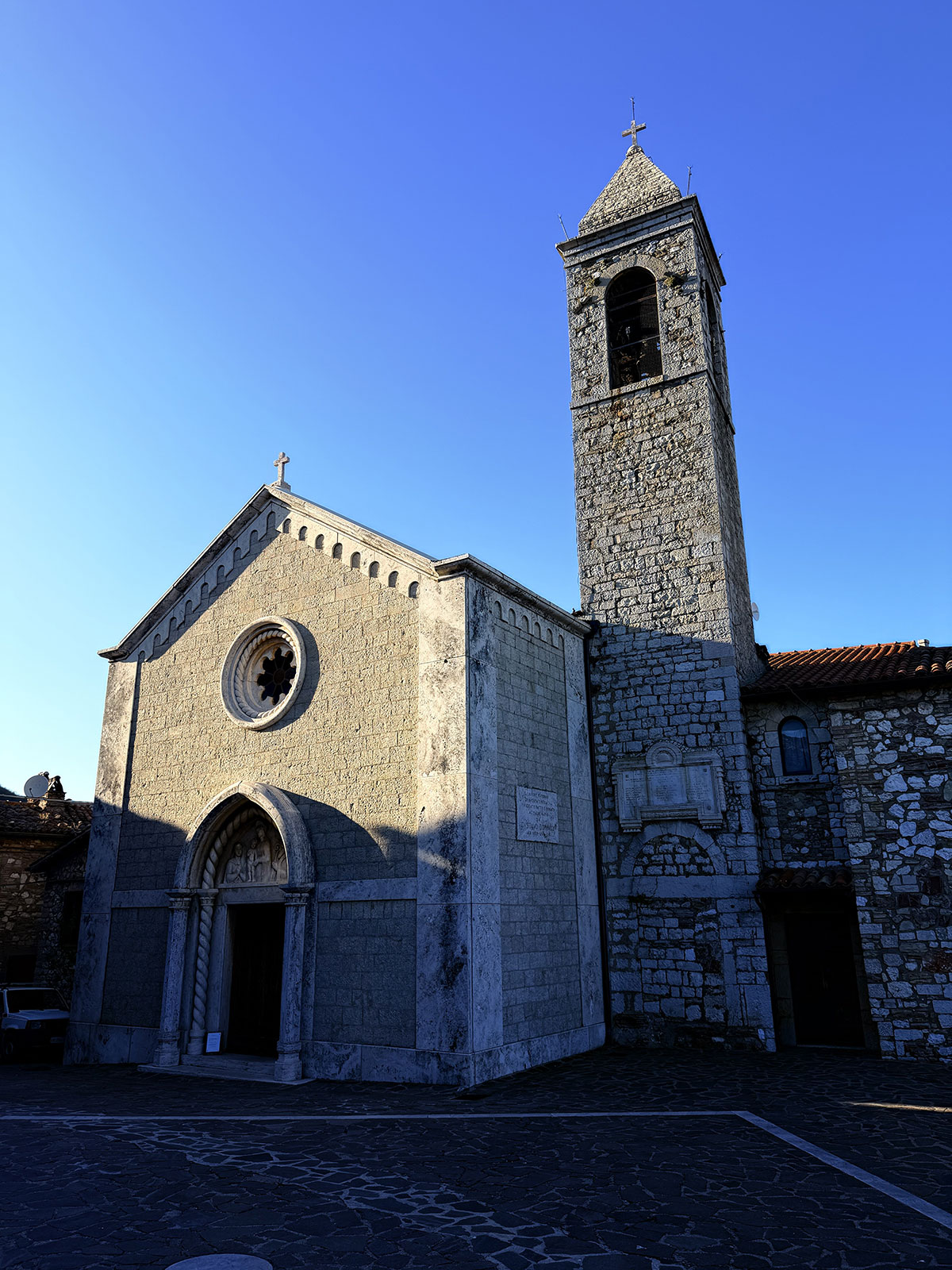
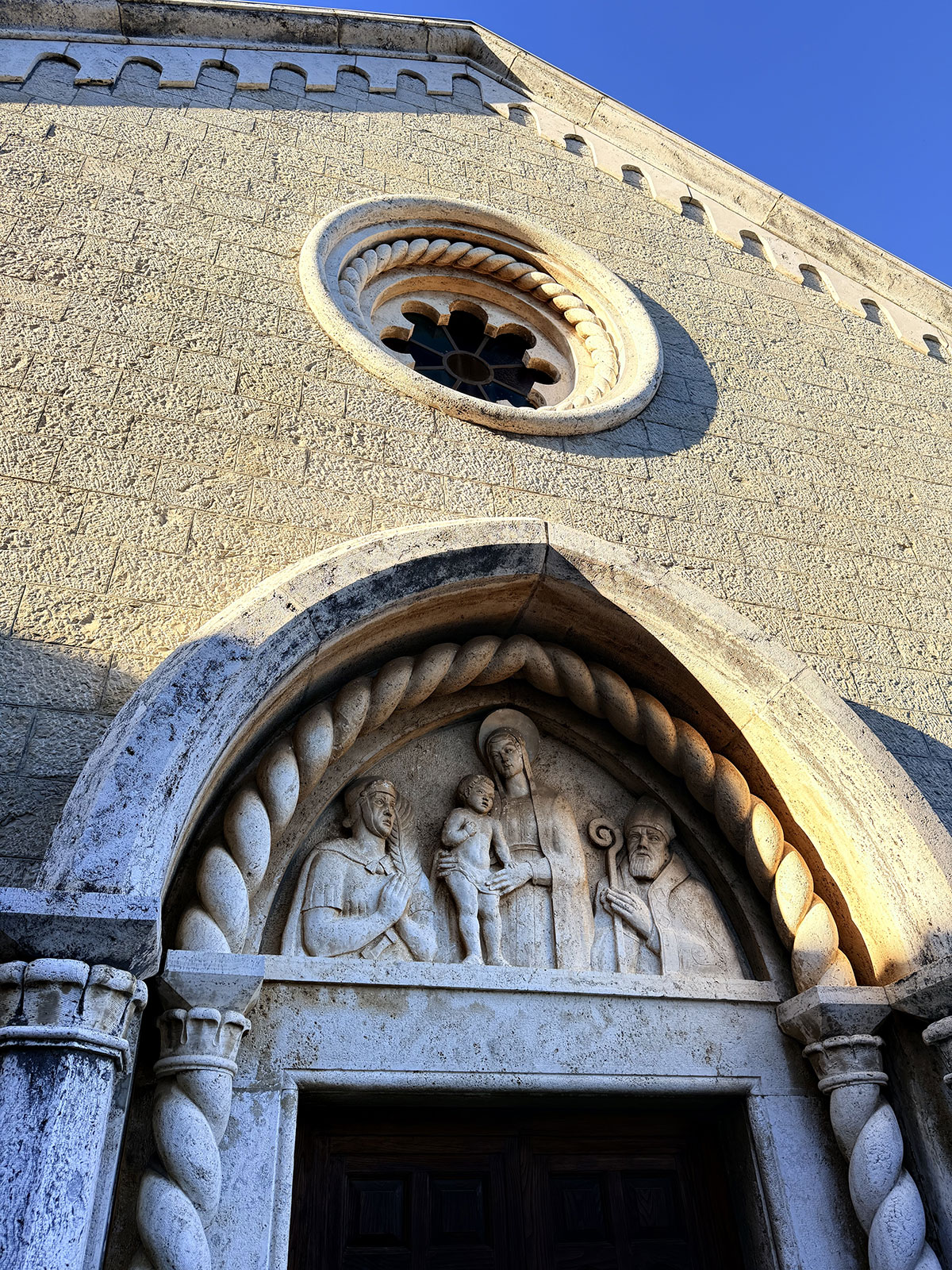
On the highest part of the hill, just below the elegant bell tower, the Church of San Biagio is Melezzole’s spiritual landmark. Inside, look for a 17th-century Last Supper fresco and a wooden statue of Saint Blaise from the same period.
Here you’ll also find the memory of the old confraternities and the religious life that shaped the village—still alive today on 3 February, when Melezzole celebrates its Patron Saint.
Architecture and interiors
The church you see today is the result of layered alterations.
Between the late 1500s and early 1600s the building changed its original east–west orientation and a new sacristy was added. Inside you can identify:
the high altar (originally dedicated to Our Lady of Piety) and traces of the former side altars to St Anthony and the Holy Crucifix;
the chapel formerly known as the Sacred Heart, which preserves the Last Supper fresco (1600, bearing the name of the patron Marco Angeli);
the 17th-century wooden statue of Saint Blaise, still venerated by locals
The history of San Biagio: from Benedictine roots to a forane vicarage
The church is documented in 1112 in a Farfa Abbey deed—the first text to mention Melezzole—listing in Latin “una ecclesia in Melezole” alongside the Pieve of Santa Maria in Gallazzano. It likely indicates a Benedictine presence active since the 10th–11th centuries. By 1277 the church is explicitly named San Biagio.
From the 15th to the 17th century the parish gained importance: the Confraternities of the Blessed Sacrament and of Our Lady of Mount Carmel held monthly processions; in 1574 the church of San Vitale was permanently annexed to San Biagio; in 1597 Bishop Angelo Cesi made Melezzole a forane vicarage, with several churches under its care (Toscolano, Santa Restituta, Camerata, Castel dell’Aquila, Avigliano). An 1586 inventory records a substantial land estate, confirming the parish’s central role in pastoral care and assistance.
Why stop here
San Biagio’s Church encapsulates Melezzole’s story in miniature: medieval roots, post-Tridentine reforms, confraternities and devotions that knit the community together. It’s a serene pause on the village loop, framed by the ancient Pieve’s memory and the bell tower pointing toward the Amerini hills.
Urban trekking
Walking Melezzole’s walls: the urban trail
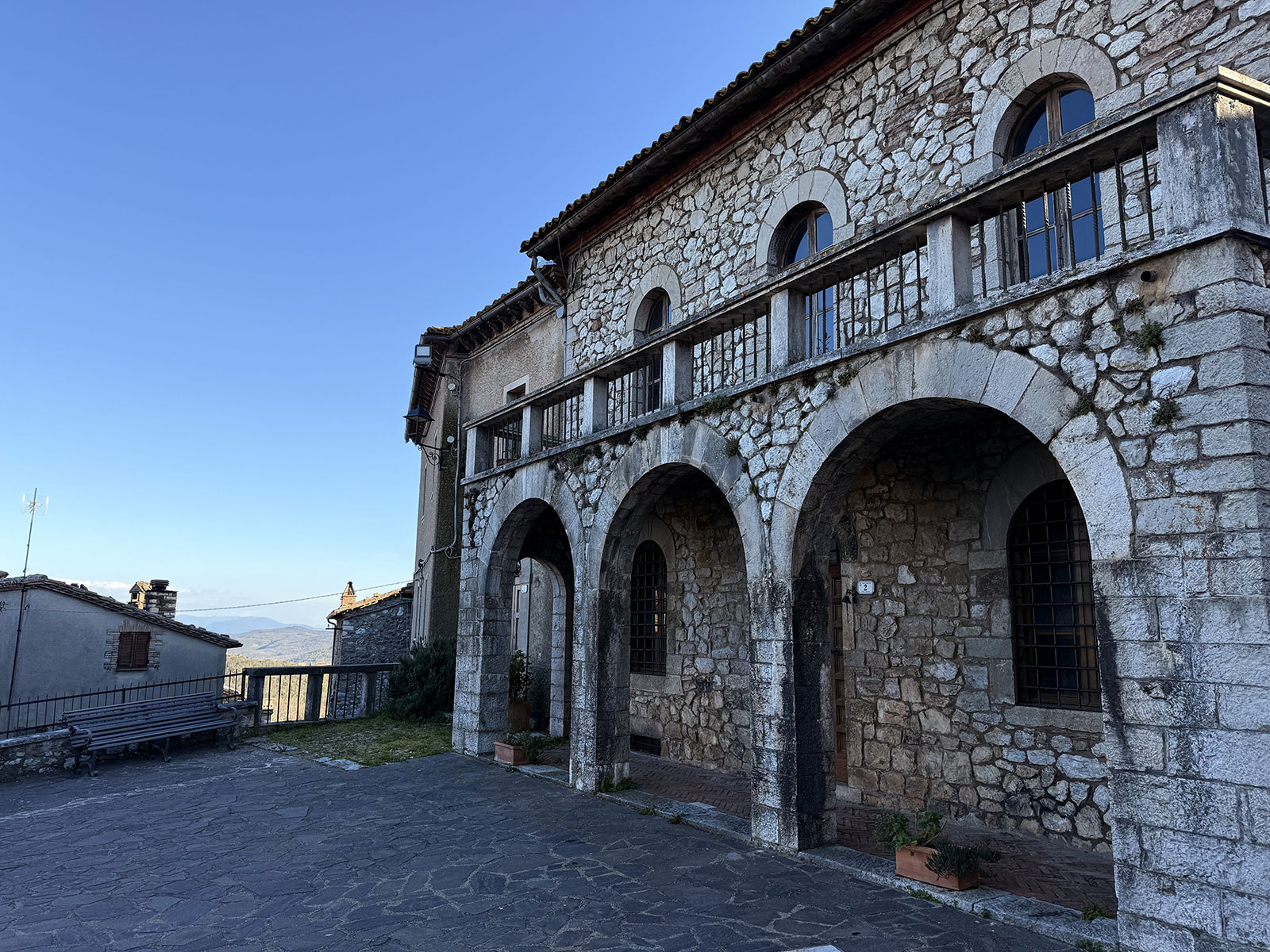
Before leaving the square, explore one of the village’s most photographed corners: with the church behind you, glance right and, before entering the Vicolo delle Baciafemmine (also on the right), step into Via Aufidia to discover the little square with the well. Then retrace your steps and slip into Melezzole’s narrowest lane.
From here you can continue to the well and the Via Rotonda, following the short circuit that explains the village’s “concentric rings” layout.