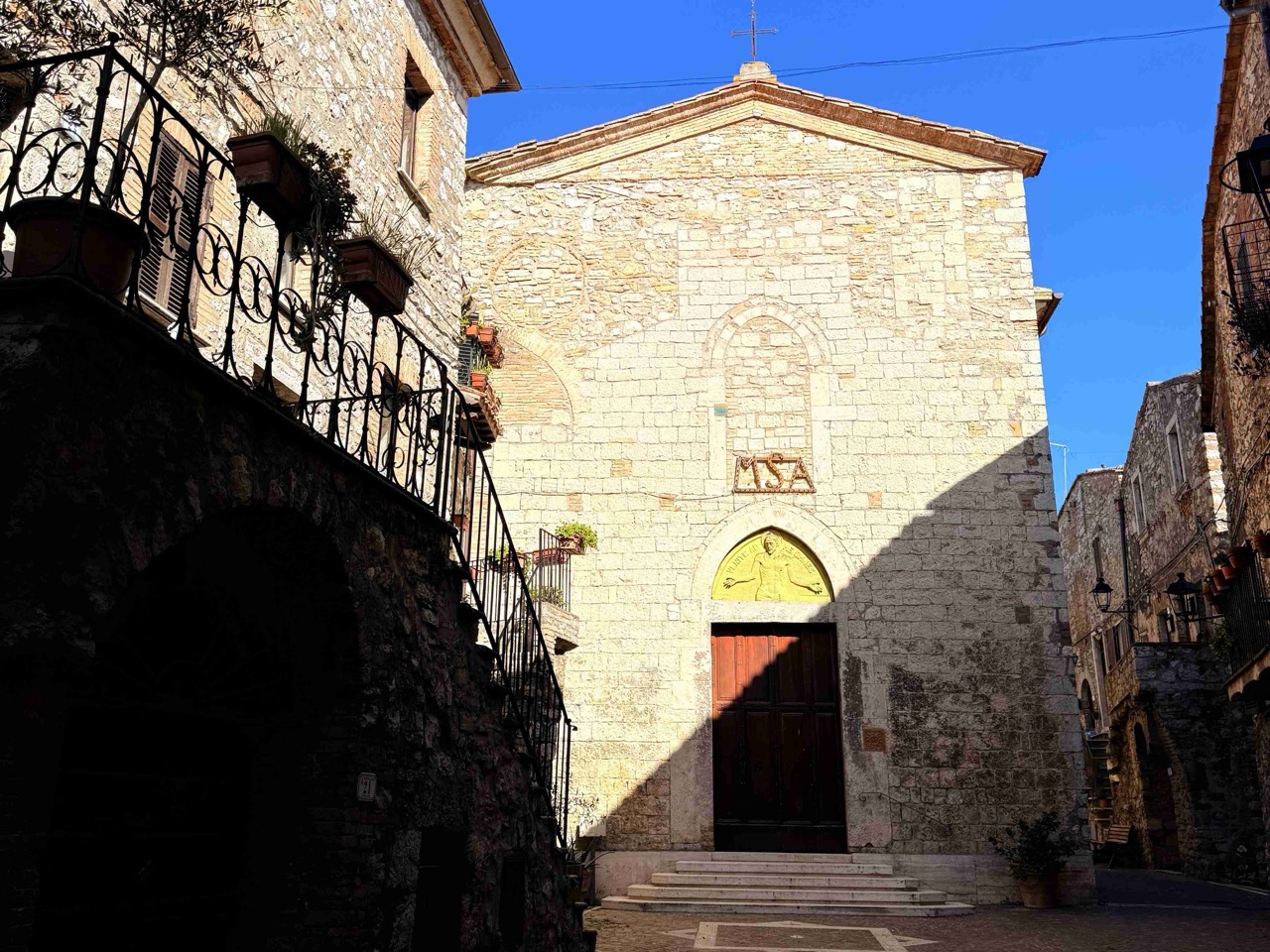
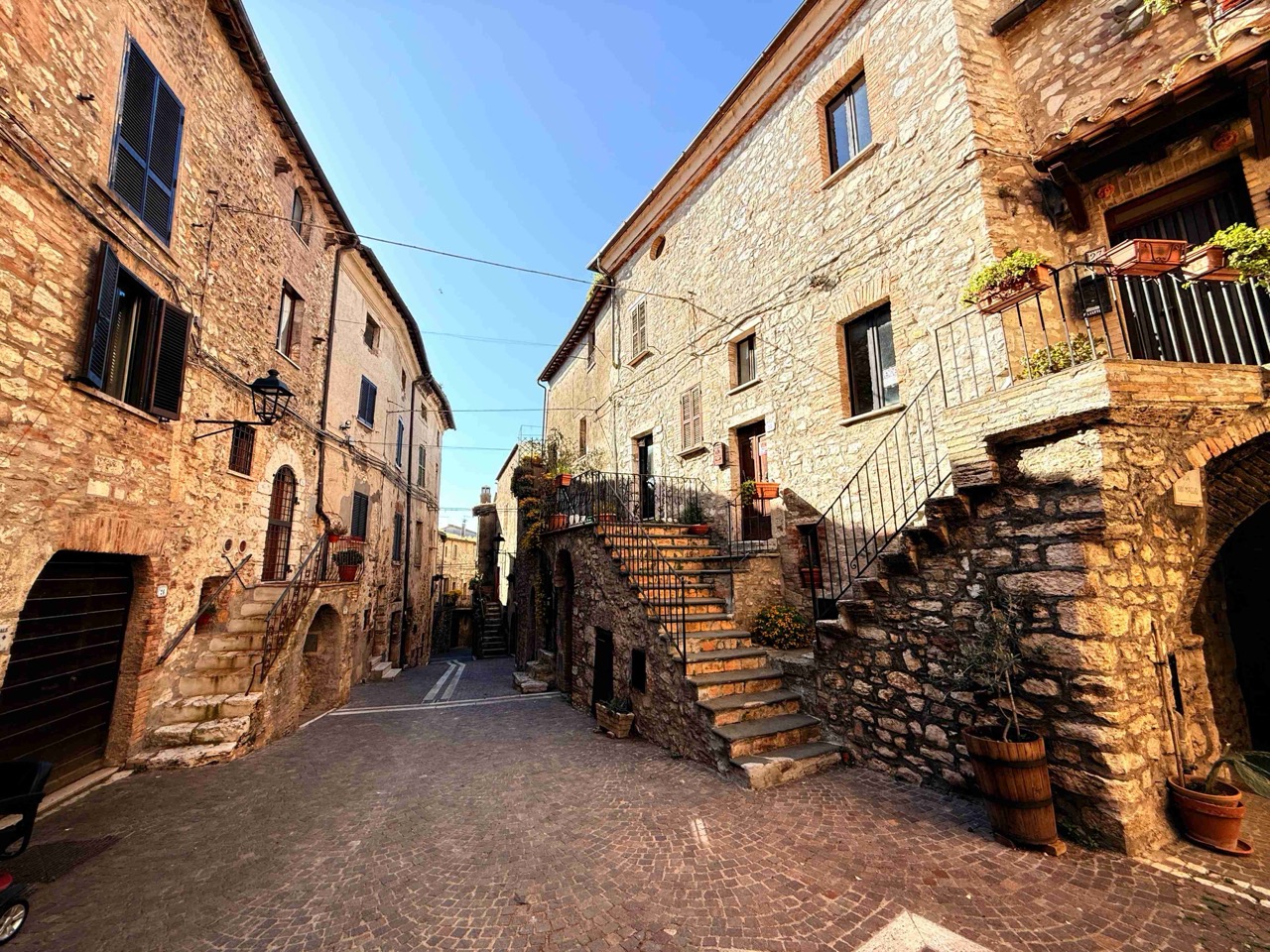
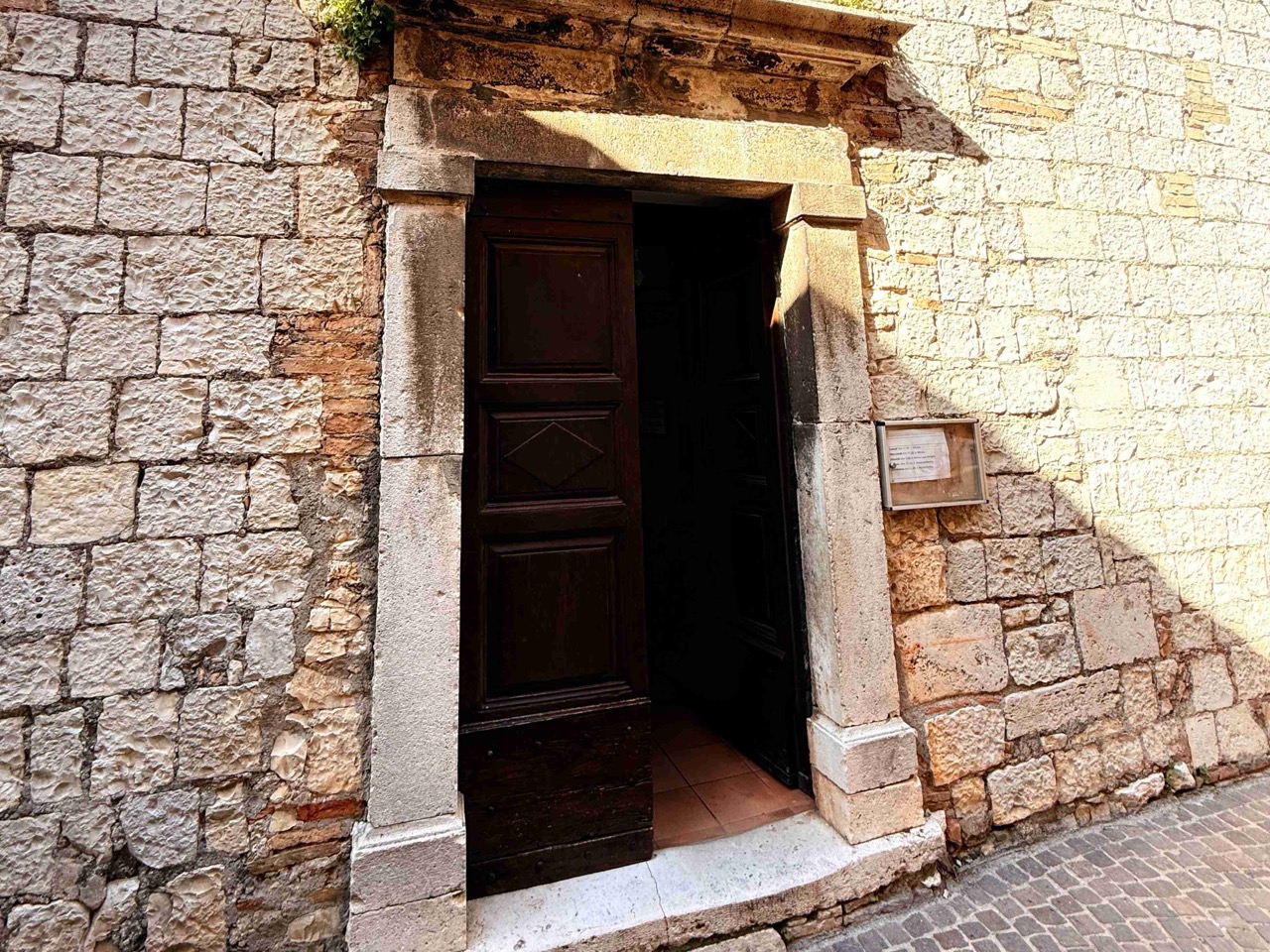
In the heart of Montecchio’s medieval castle, a few steps from Porta Nova, the Church of Santa Maria Assunta is the town’s spiritual centre: three naves that breathe tradition, a 17th-century bell tower, and traces of sacred art telling centuries of devotion.
Architecture and interiors: an Umbrian church of stone and light
The current appearance dates to the 19th century: the nave was expanded to three aisles divided by square pillars and covered with sail vaults; the presbytery is raised, protected by a marble balustrade, and ends in a semicircular apse.
The façade—reworked several times—has a wide portal; on the historic side you can spot the travertine portal with ogival lunette, a Gothic window now walled up, and the traces of the original gable bell-cote. The present bell tower was erected in 1633.
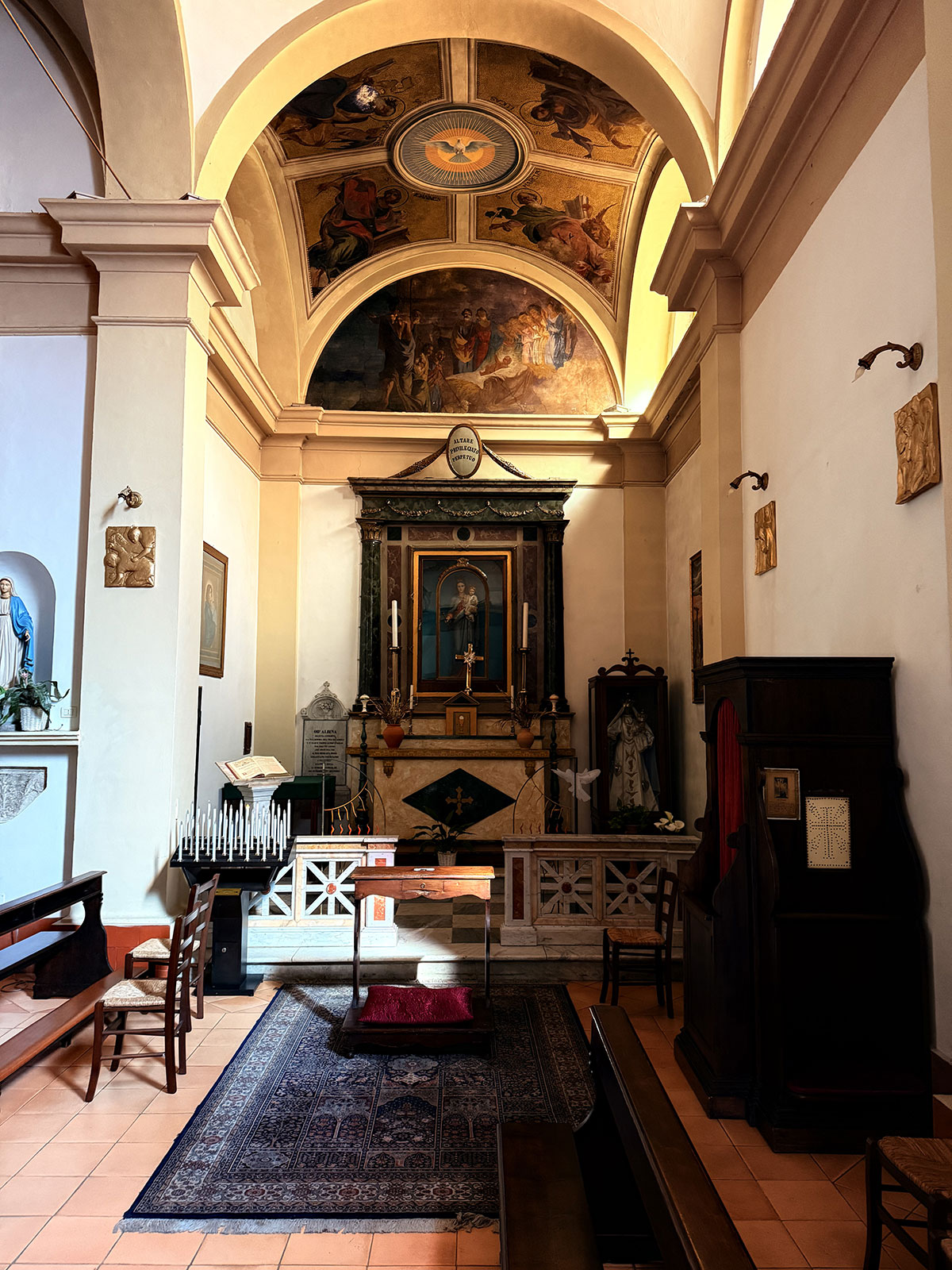
The three bells in use bear dedications and dates: Mary Assumed into Heaven (1729), Saint Barbara (1741) and Montecchio–Baschi (1896). Inside, besides the high altar dedicated to Saint John the Baptist, note the baptismal font (1843), the Nativity with the Evangelists fresco in the apse of the Madonna dei Prodigi chapel, and large confraternity canvases.
History: from the medieval castrum to contemporary restorations
The church began as a single-aisle hall within the castrum: its presence is documented by a 1400 deed. In 1437 a now-lost decoration for a chapel of the high altar was executed by Lello da Velletri, follower of Gentile da Fabriano—evidence of the area’s artistic vitality between Umbria and Orvieto.
In the 17th century the community raised the bell tower (1633). In the 19th century the building was almost rebuilt: expanded to three naves, re-oriented (high altar to the north) and structurally linked to the bell tower, adapting space and liturgical language. Between the 20th and 21st centuries, wide-ranging works renewed roofs, hand-made terracotta floors, plasterwork, furnishings and decoration, restoring unity and light.
Urban Walk
Why visit
It’s a natural stop on Montecchio’s urban trekking route and a quiet place of welcome for pilgrims and walkers on the Cammino dei Borghi Silenti. Here you’ll find Umbrian architecture, sacred art and the authentic atmosphere of Umbrian medieval villages. During services, please visit respectfully; comfortable shoes recommended.
Among stones and bells, the community has kept time here for centuries—and welcomes those who arrive.