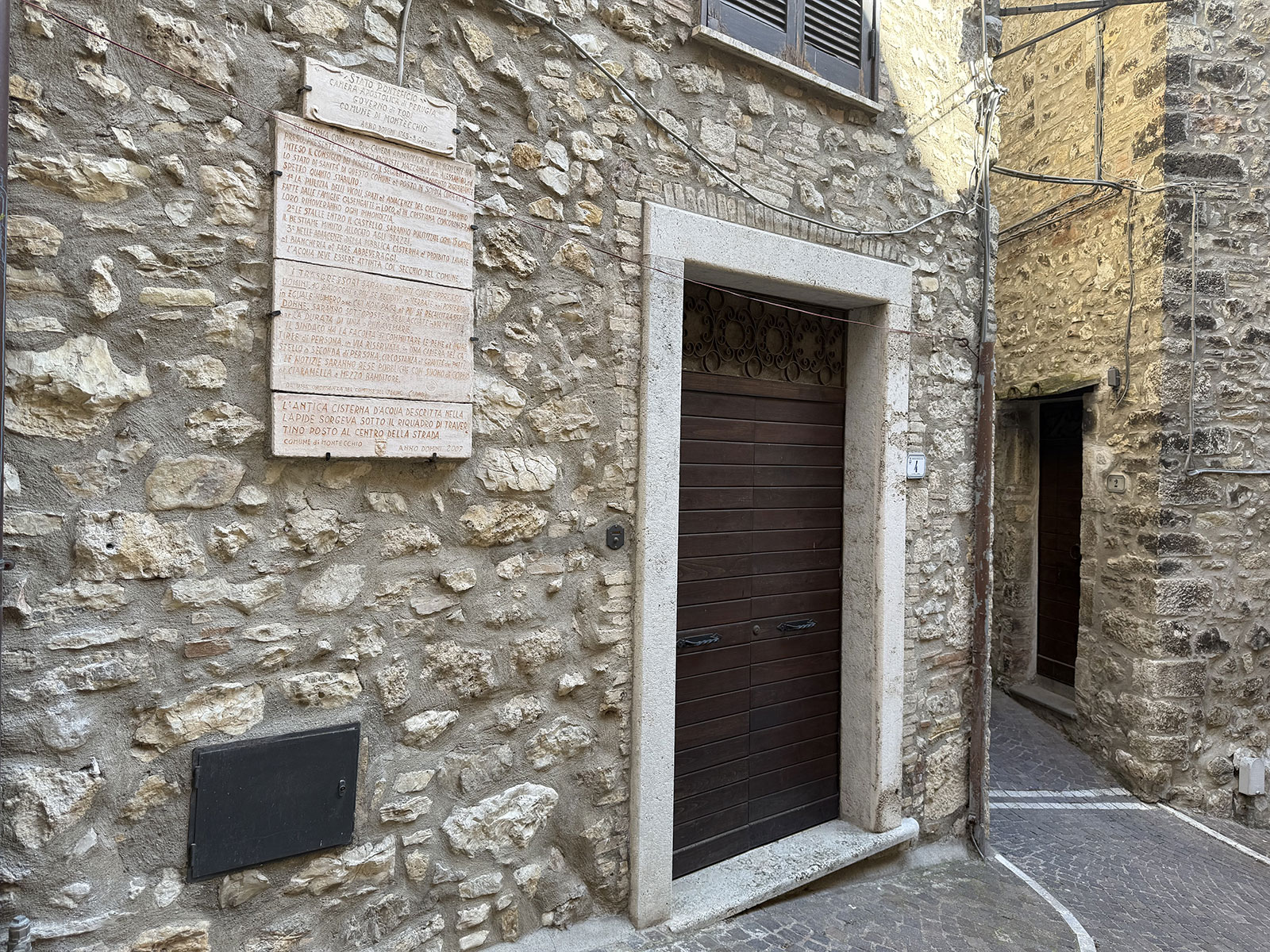
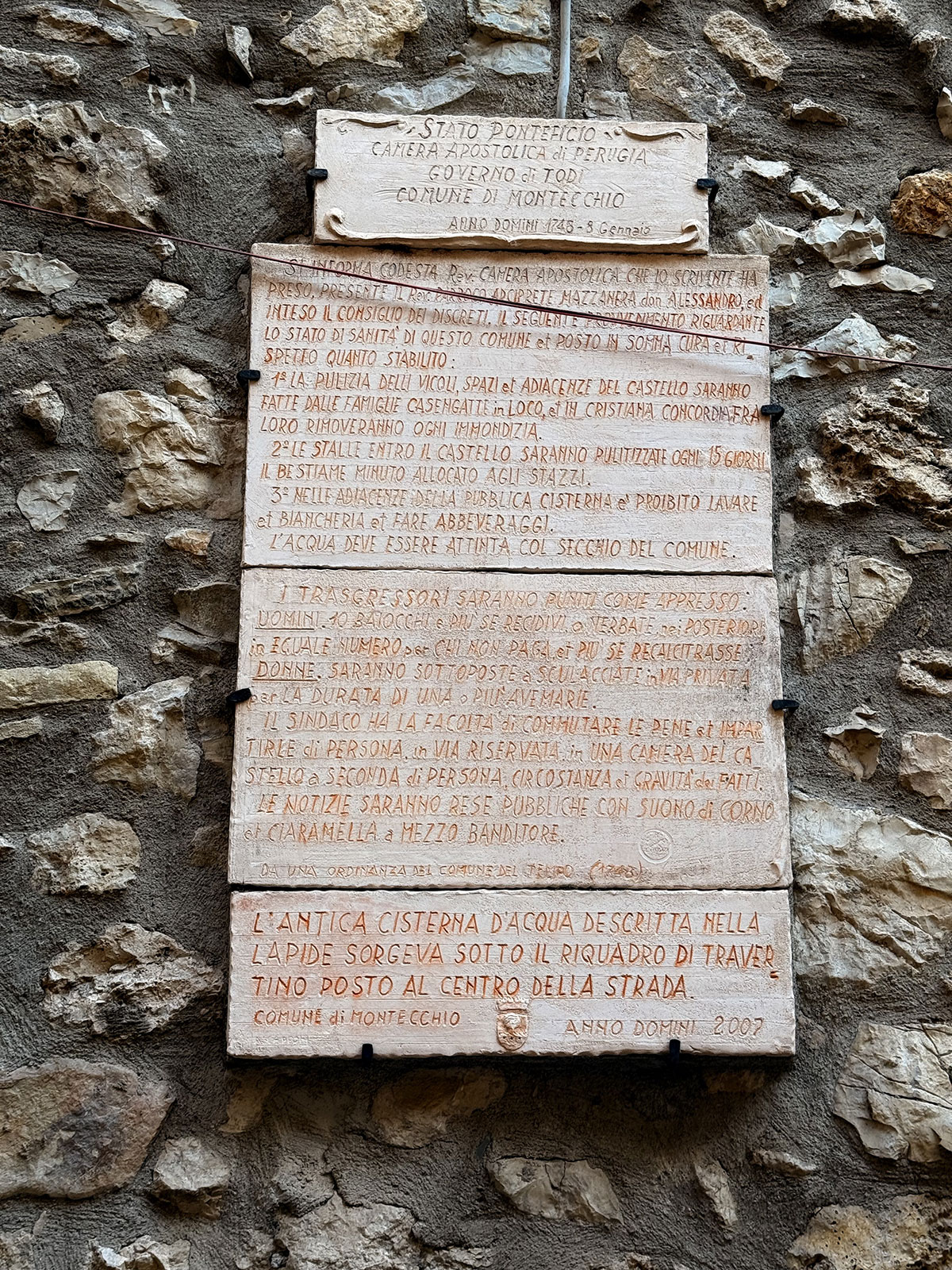
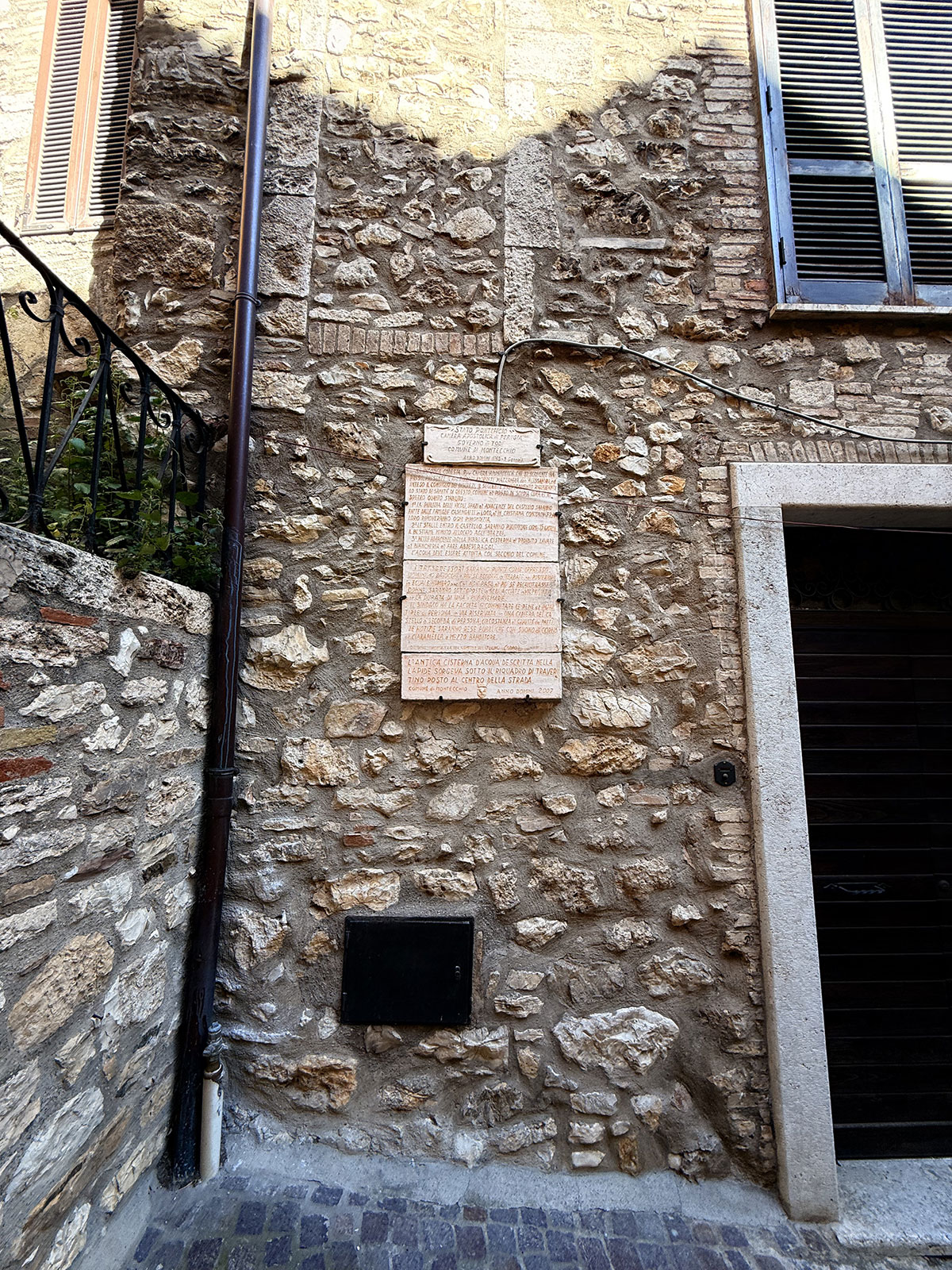
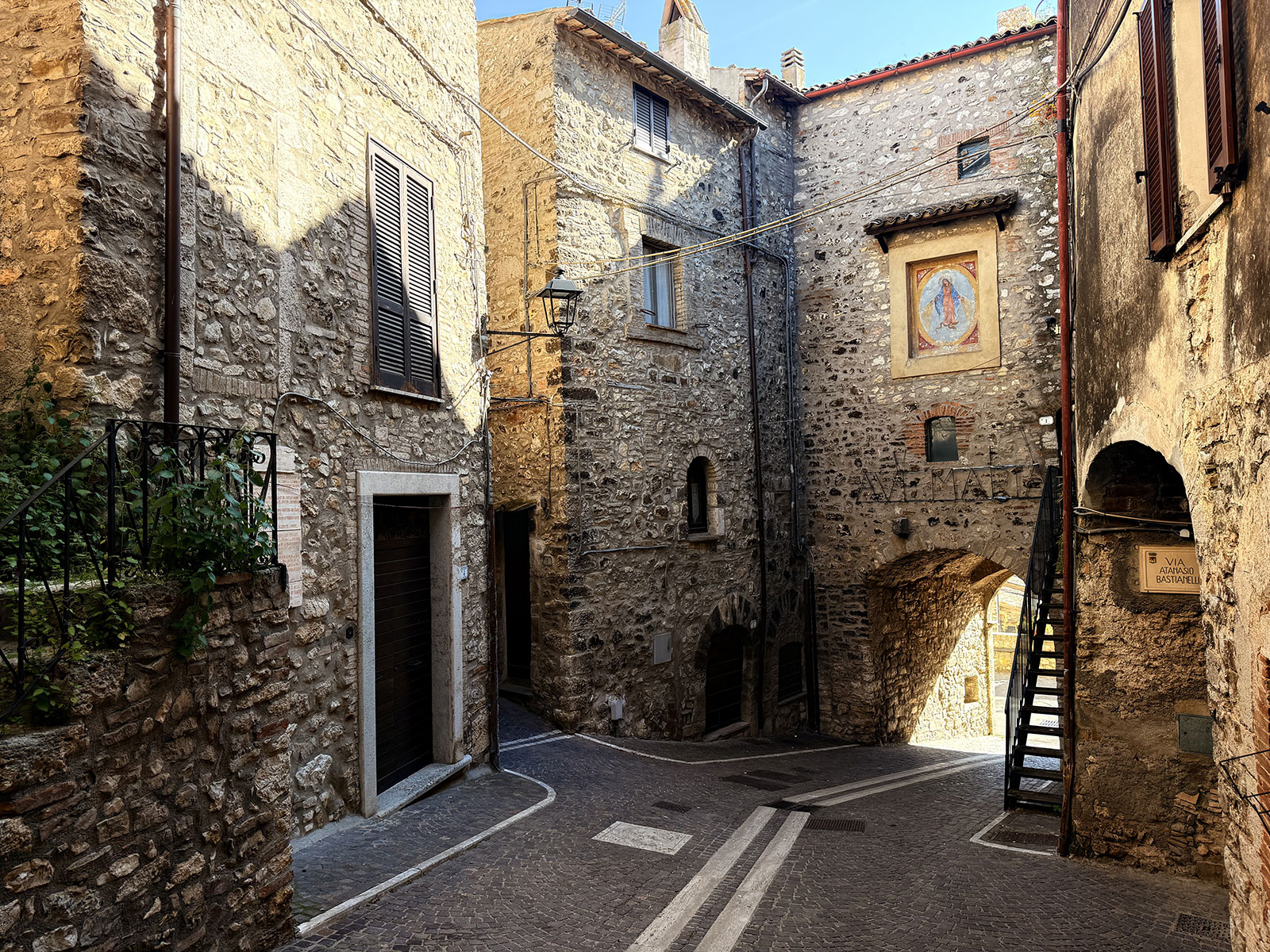
Just after La Torre, on the rising lane to your right, a travertine slab set in the paving marks the public cistern; beside it—on the right—an inscription from 1748 preserves the ordinance known as the Punishment Tablet: a few stark lines on how hygiene, decorum and, above all, the water of the castle were protected.
The Punishment Tablet: rules, bans and “colourful” sanctions since 1748
In the 18th century, under the governorship of Todi for the Papal States, the community set clear rules: lanes cleaned by resident families, stables scrubbed every fifteen days, and a ban on washing or watering at the cistern; water had to be drawn with the town bucket only.
The penalties? Men: a fine of 30 baiocchi in copper, with lashes “to the backside” for non-payers or repeat offenders. Women: spankings “in private” for the duration of one or more Hail Marys. The mayor could commute or even administer the penalty in person in a room of the castle. A town crier announced the rules to the sound of horn and shawm.
Today the text may raise a smile, but it vividly conveys everyday community life in a transitional age—between the old world and the modern.
Urban Walk
A stop on the urban trail that tells daily life inside the walls
If you’re following the urban trek, pause here: note the cistern marker and read the Punishment Tablet. When ready, continue beyond the second gateway of the settlement: to the left lies Vicolo Brutto, another page of history to discover.