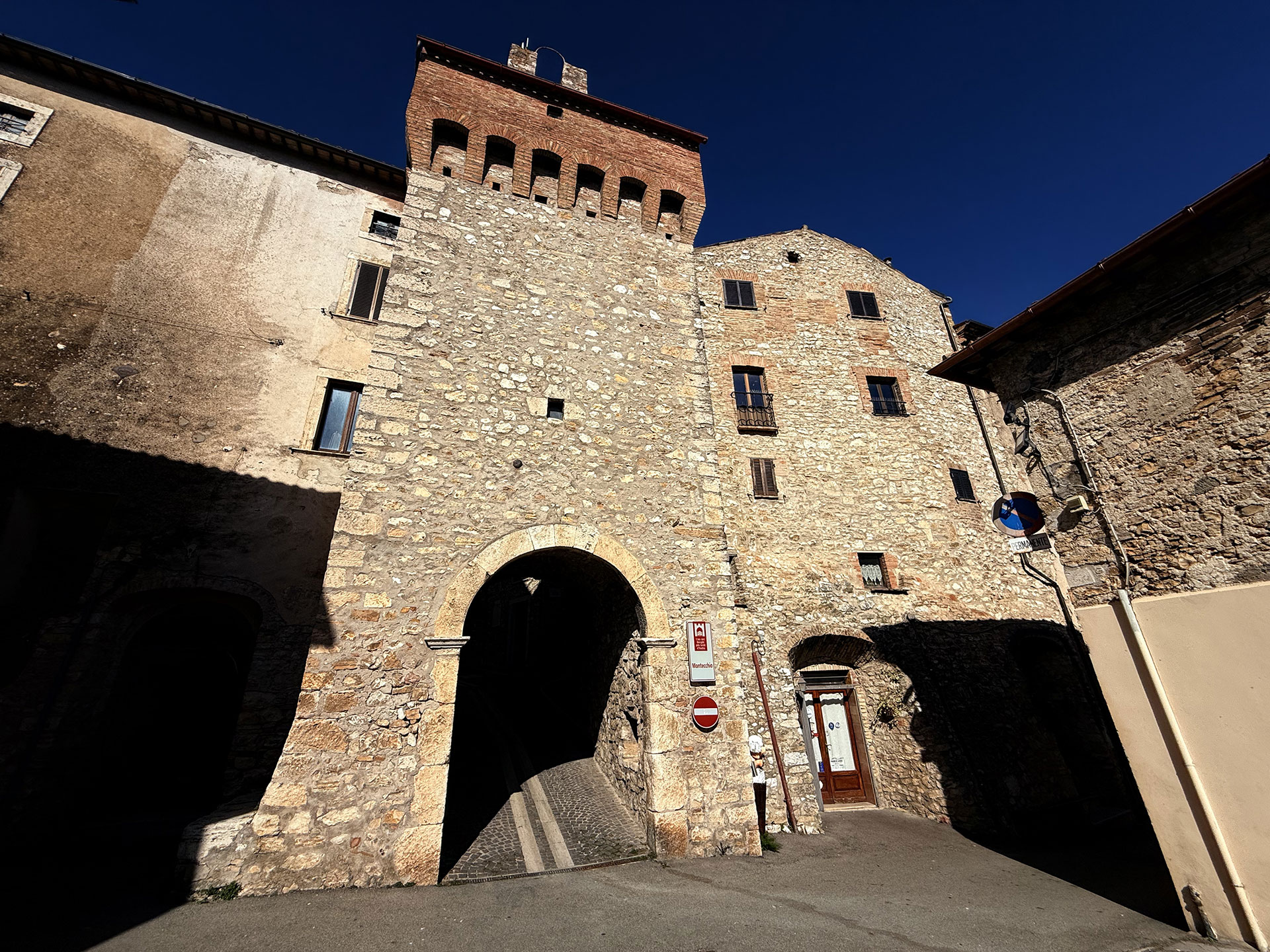
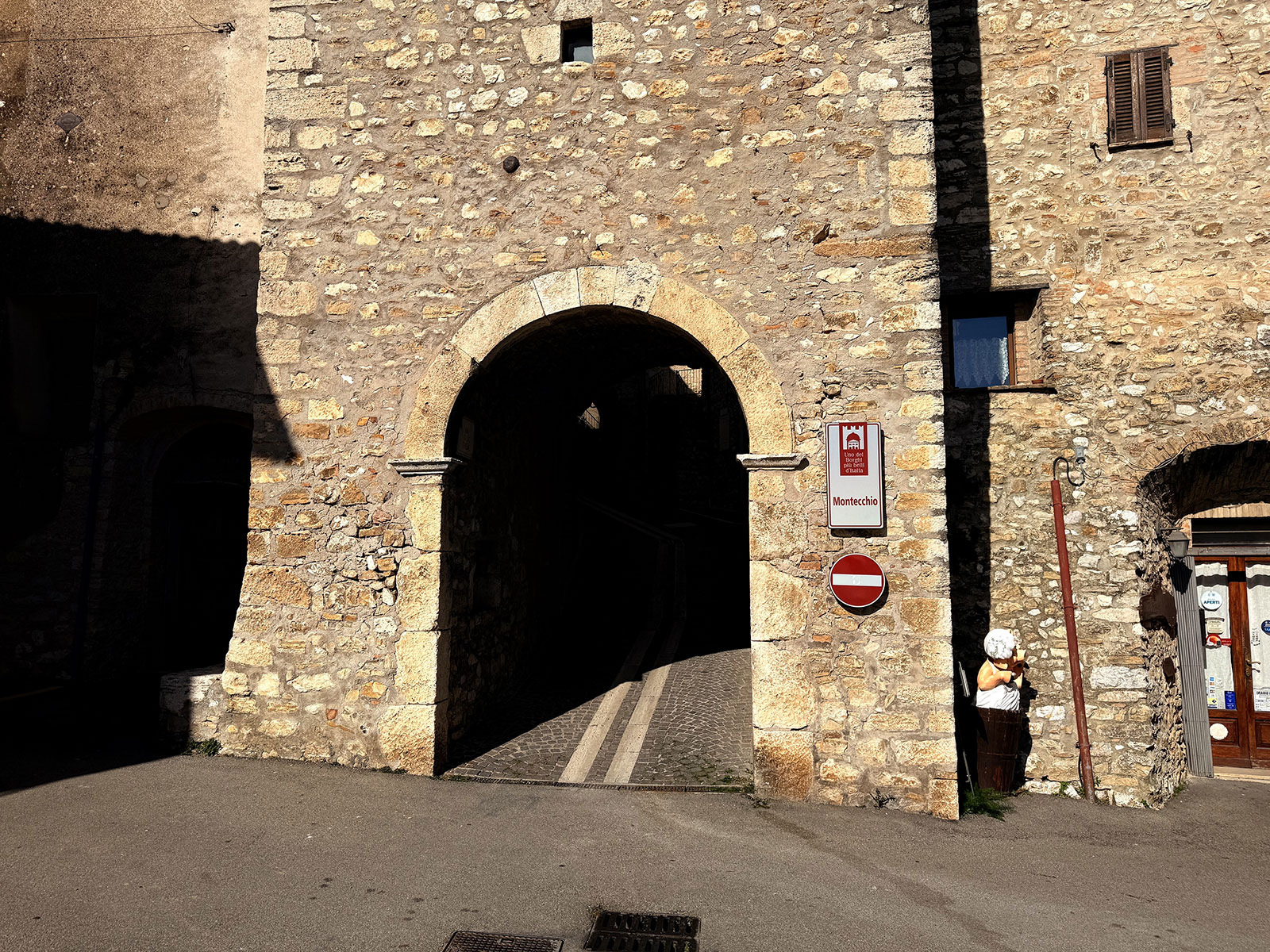
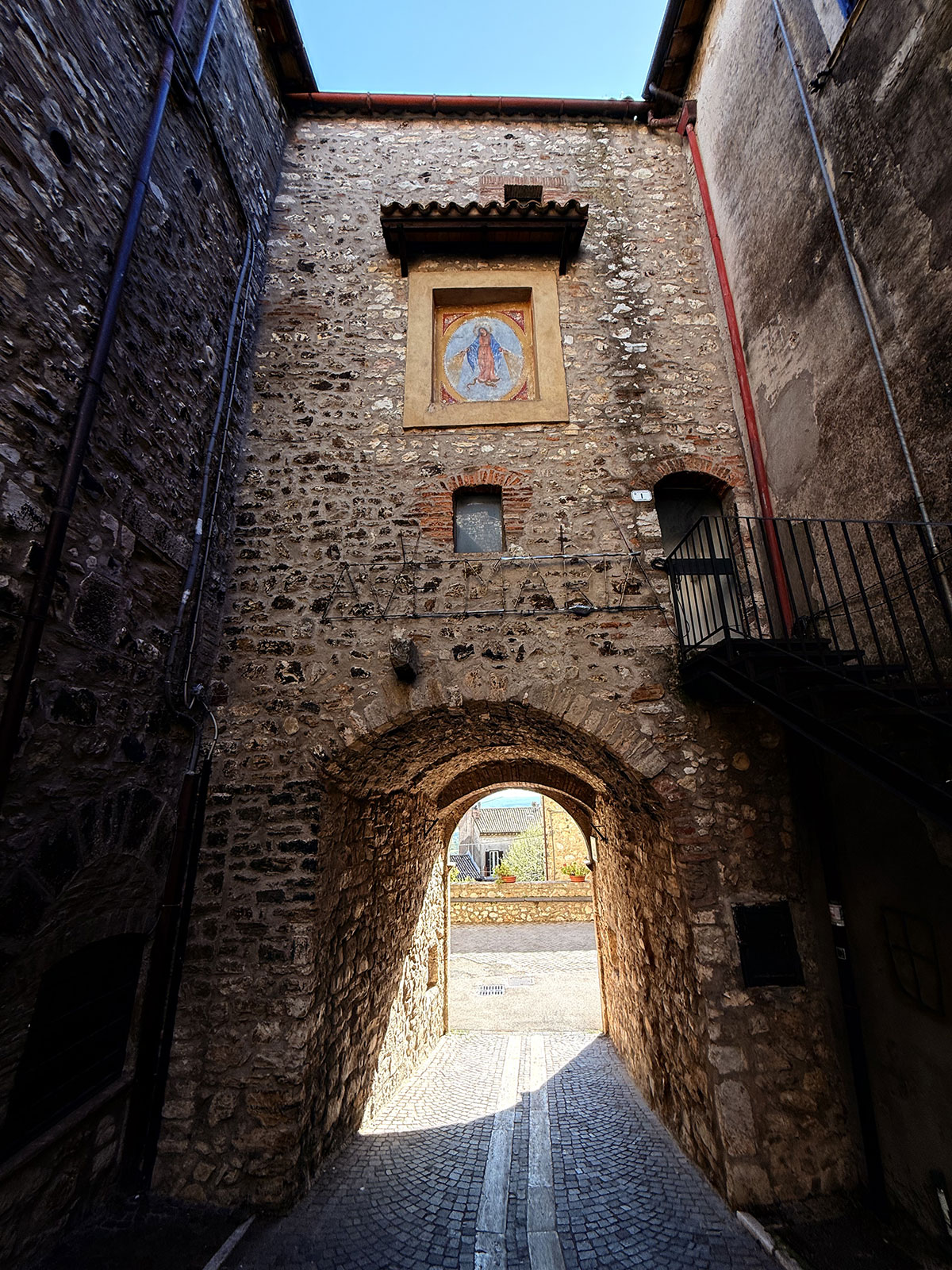
The southern gate into the castle layout, The Tower guards Montecchio’s oldest entrance with its commanding mass. Note the full-centre stone arch supporting three storeys that culminate in battlements.
The Tower: the ancient gateway to the castle
Oriented to the south-west, it was for centuries the castle’s only entrance.
The full-centre stone arch leads beneath a three-storey tower, once home to the Guard Corps. At the base, along the sides of the square volume, you can spot two loopholes for low-level fire; at the top the structure ended with a defensive walkway (projecting parapet) from which sentries controlled and protected the approach. It is plausible there was also a housing for a bell used as a signal. The architectural language recalls the Todi area, with which Montecchio long shared ties.
A detail that tells history: just above the arch, on the left, a cannonball is embedded—traditionally linked to Matteo da Canale’s siege of 1496.
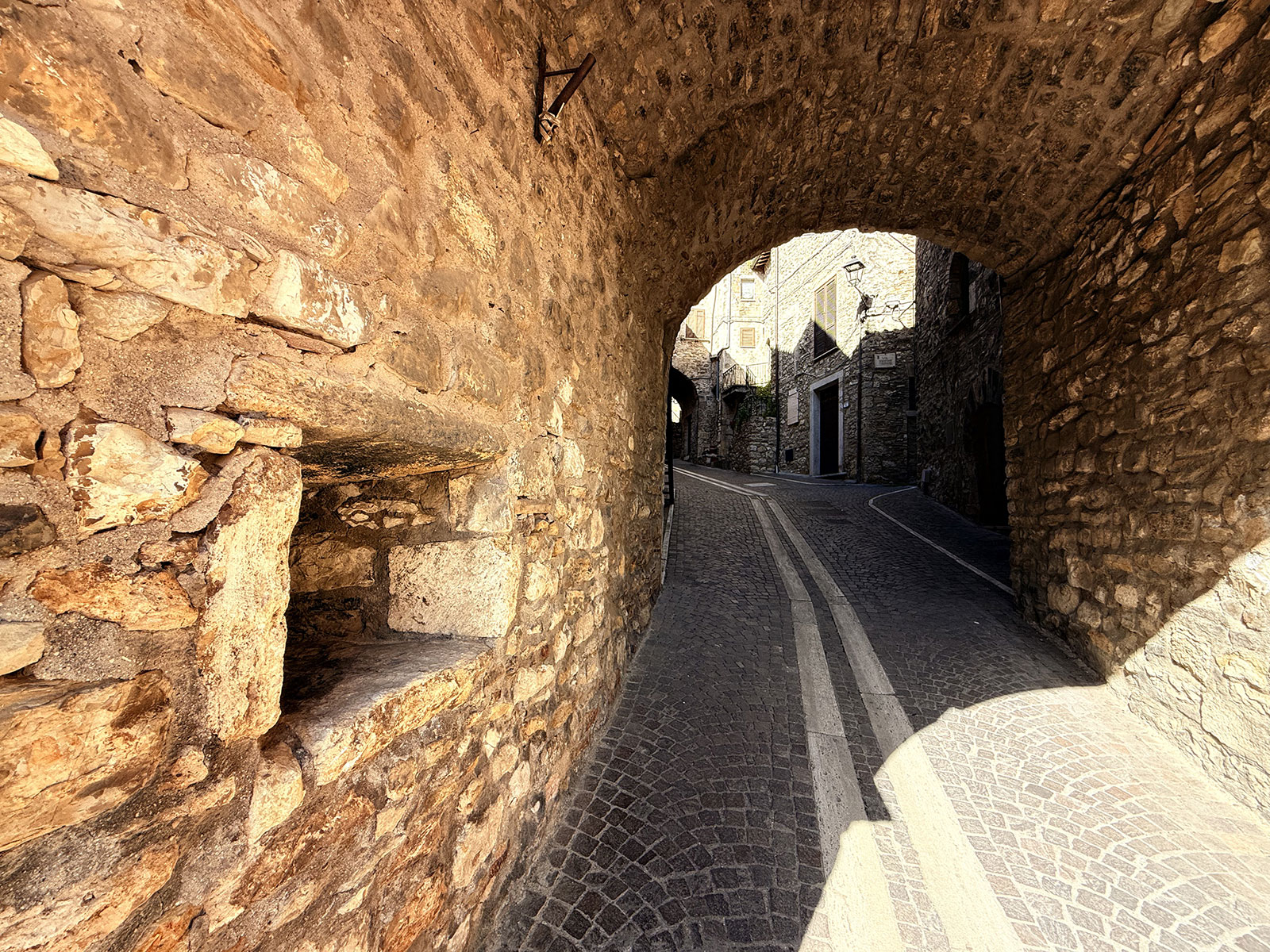
On the inner face appears an image of the Immaculate Madonna, a devotional icon consistent with medieval prescriptions to place Marian images guarding castle gateways.
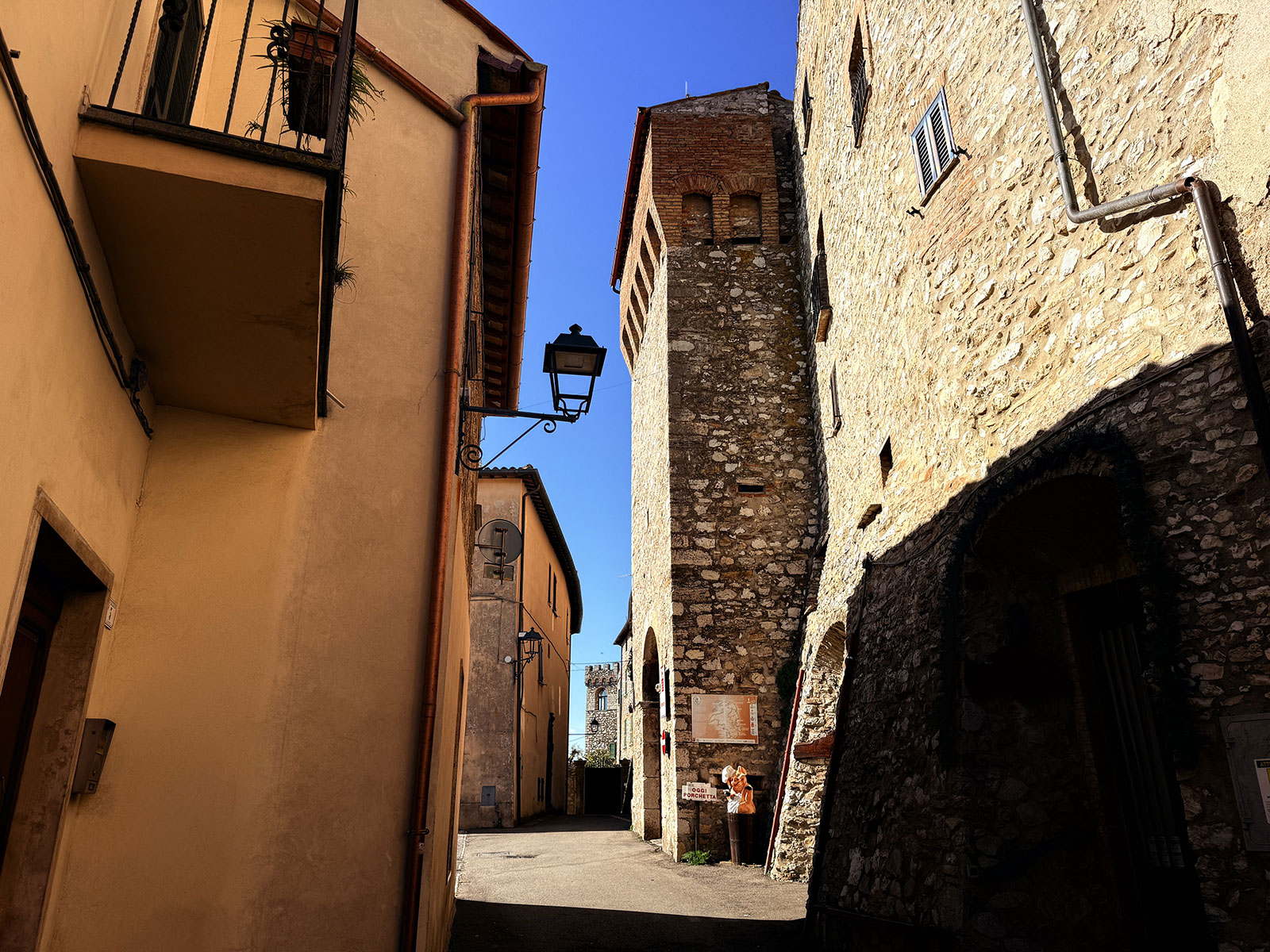
Beyond the Tower, a second opening ushers you into the earliest residential core: Via della Chiesa rises among slopes and lanes—left to Vicolo Brutto, right uphill to the forecourt of Santa Maria Assunta.
Urban walk
The Tower: the entrance to the route inside the walls
If you’re following the urban walk, enter here: look up to the cannonball, pass under the Madonna’s icon and continue to the Punishment Tablet and the communal cistern.
Scroll below to discover everyday life inside the castle and the striking—sometimes colourful—penalties once imposed on rule-breakers.