The small church of Tenaglie between devotion and art
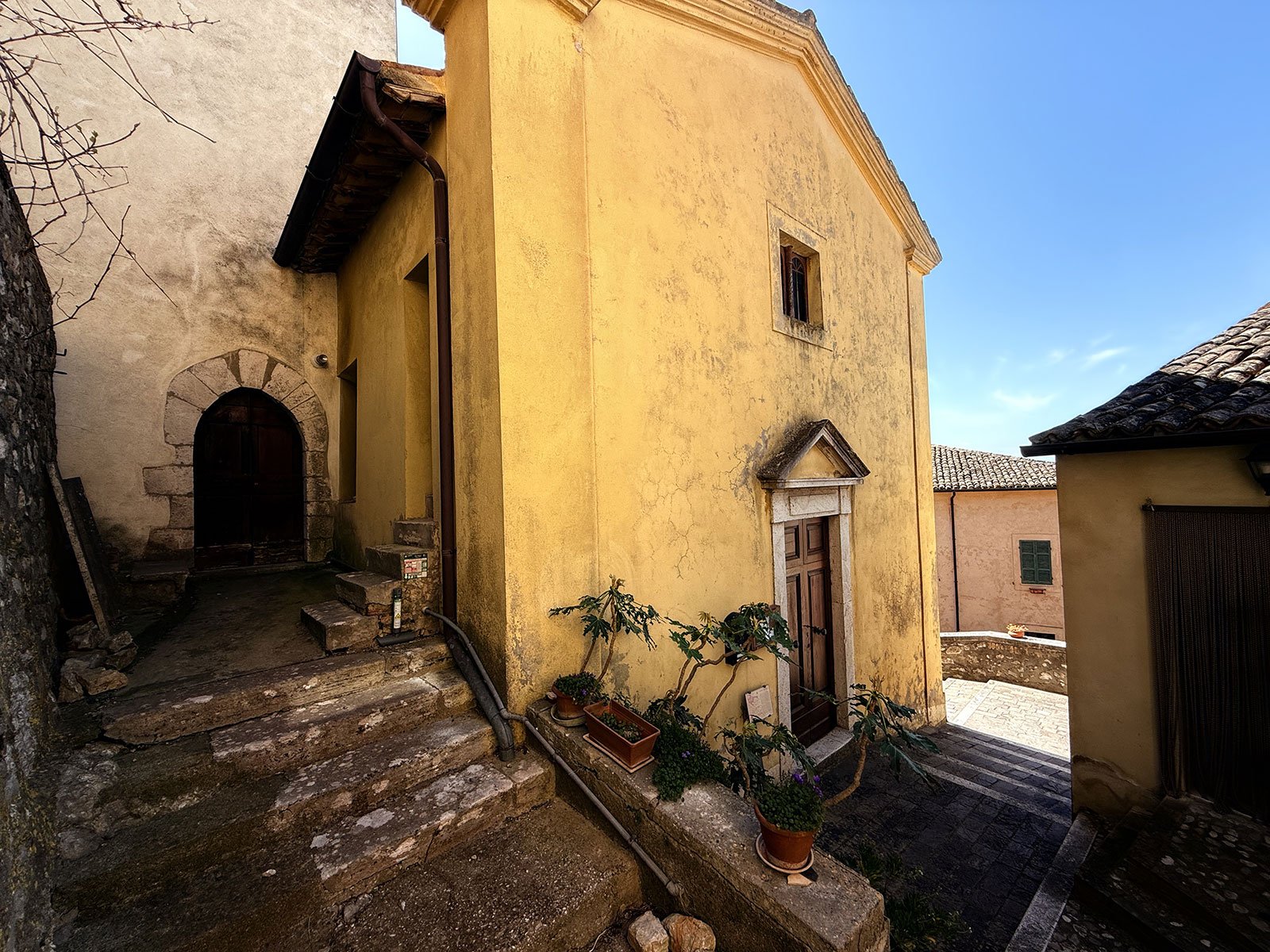
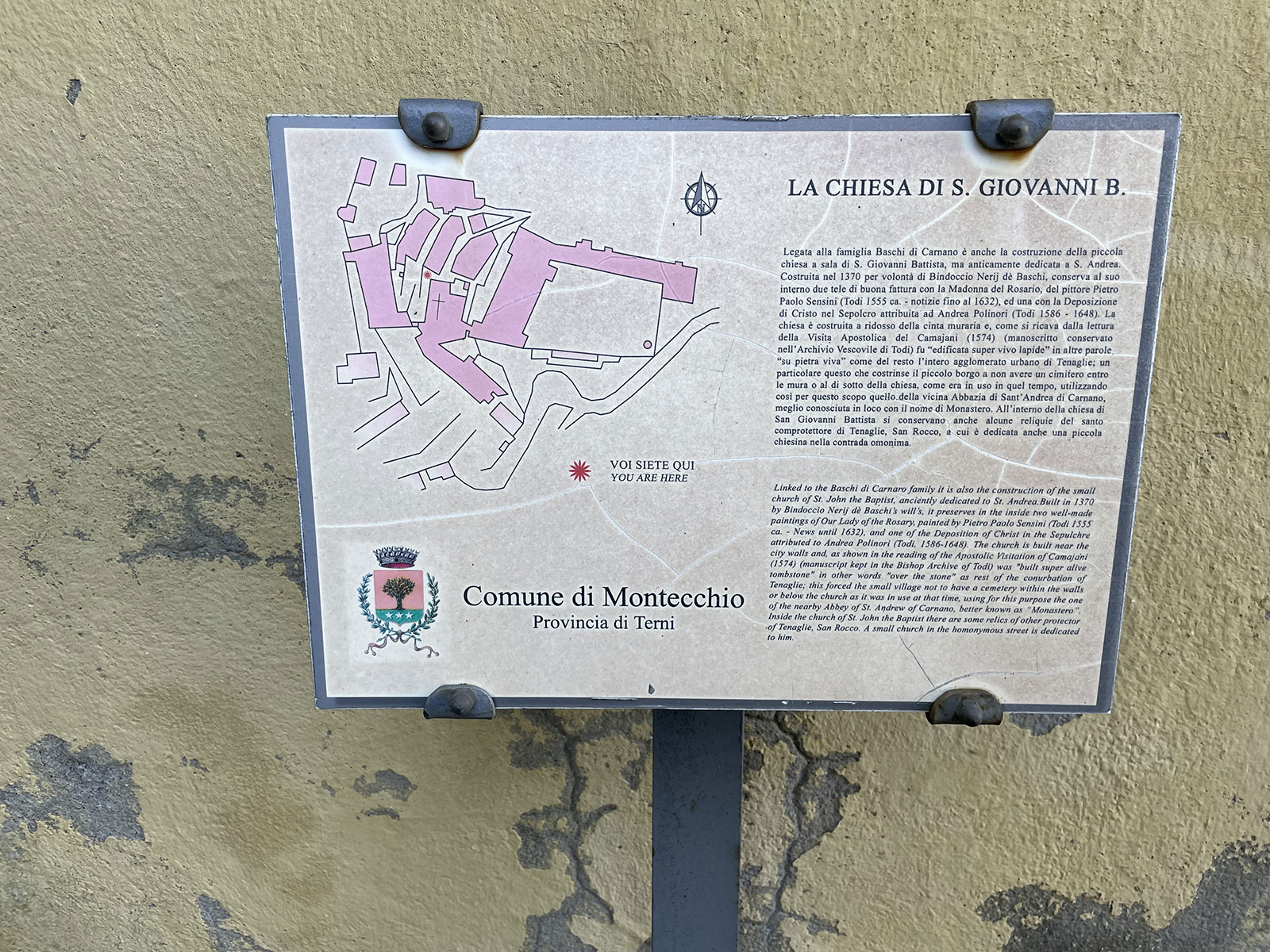
Set along Tenaglie’s curtain wall, the Church of St John the Baptist was built in 1370 at the behest of Bindoccio Nerij de’ Baschi and was originally dedicated to St Andrew.
Cited in the 1574 apostolic visitation as built “super vivo lapide” (on living rock), over the centuries it has been restored several times and has safeguarded the community’s memories and relics: among them stands out the reliquary of St Roch, with a marble frame dated 1408 inscribed “RELIQUIE S.S. ROCHI 1408”, a sign of the very ancient devotion to Tenaglie’s Patron Saint, celebrated on 16 August.
Embedded in the medieval fabric of the historic centre, the church is a single-nave hall, plastered and painted, with a marble socle band. The roof is double-pitched on timber trusses and beams; the presbytery, with a segmental barrel vault, is raised by two steps and protected by a marble balustrade, with the high altar further elevated on a platform. A masonry gallery runs along the counter-façade. The flooring combines cement-graniglia tiles in the nave and marble slabs in the presbytery.
Inside are preserved a sixteenth-century baptismal font (documented already in 1583), the reliquary of St Roch, and an altarpiece by Pietro Paolo Sensini (1618)—an intense Madonna of the Rosary linking Tenaglie to the figurative culture between Todi and Umbria in the seventeenth century.
Outside, the gable façade is orderly and bright: a portal with a travertine frame and triangular pediment is topped by a rectangular window; to the rear rises the bell-gable with three bells. The roofing in coppi and sottocoppi rests on two main trusses with struts (limette) and brick decking (pianellato laterizio), underscoring the constructive simplicity of the place.
The records portray a lively and layered parish: the 1873 inventory lists three altars (the high altar of St John the Baptist; the Holy Crucifix; Our Lady of the Rosary).
A general restoration in the early 1980s concerned the interior, exterior and roof, alongside liturgical adjustments, consolidating the image that welcomes worshippers and visitors today.
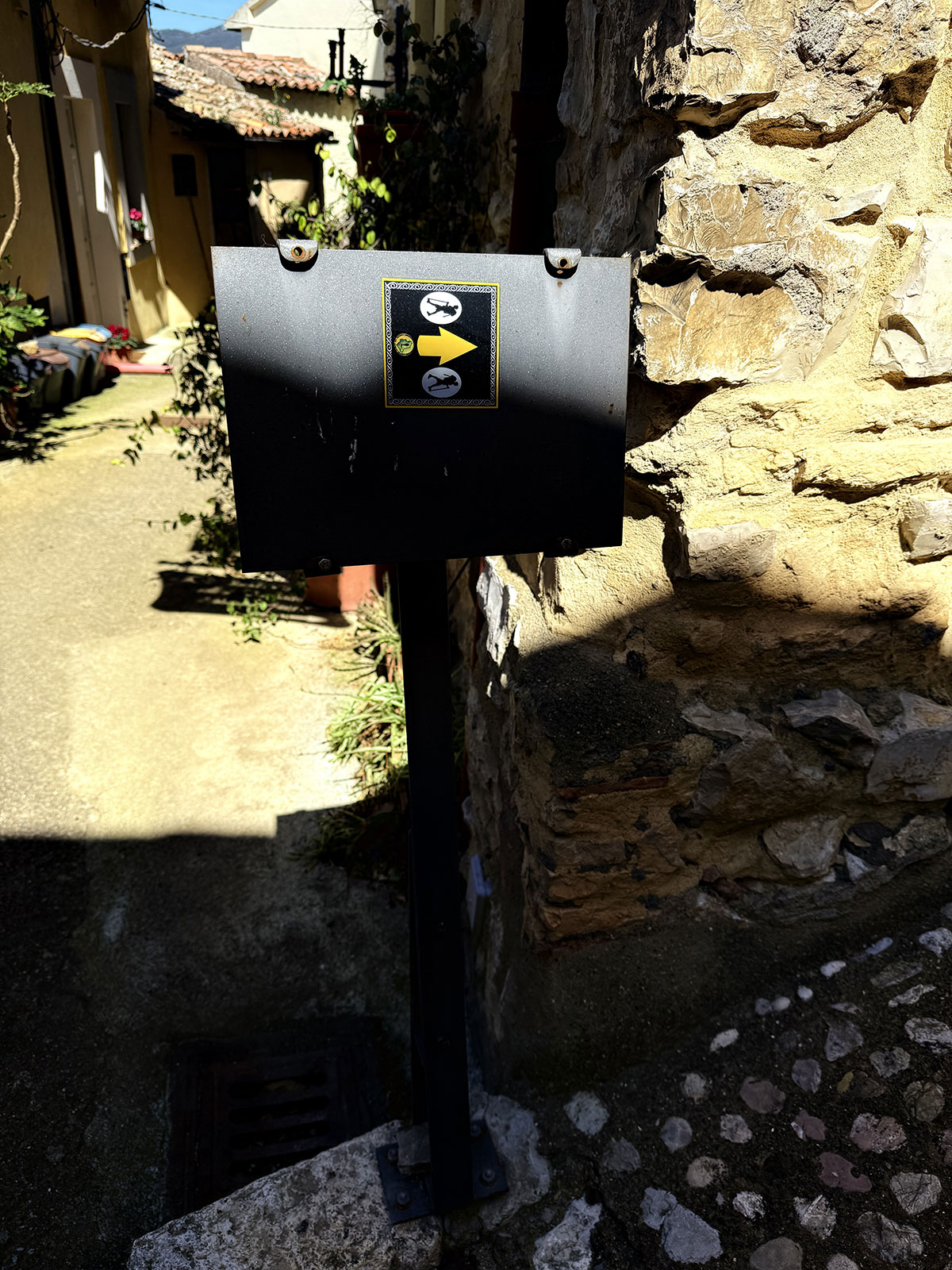
Once you have visited the church, for those continuing the walk it is interesting to climb the steps up beneath the internal entrance staircase of Palazzo Ancajani, then turn right and follow the Cammino dei Borghi Silenti as it runs alongside the building to the outer entrance, where you discover, besides the Italian-style garden, a splendid view towards Montecchio.
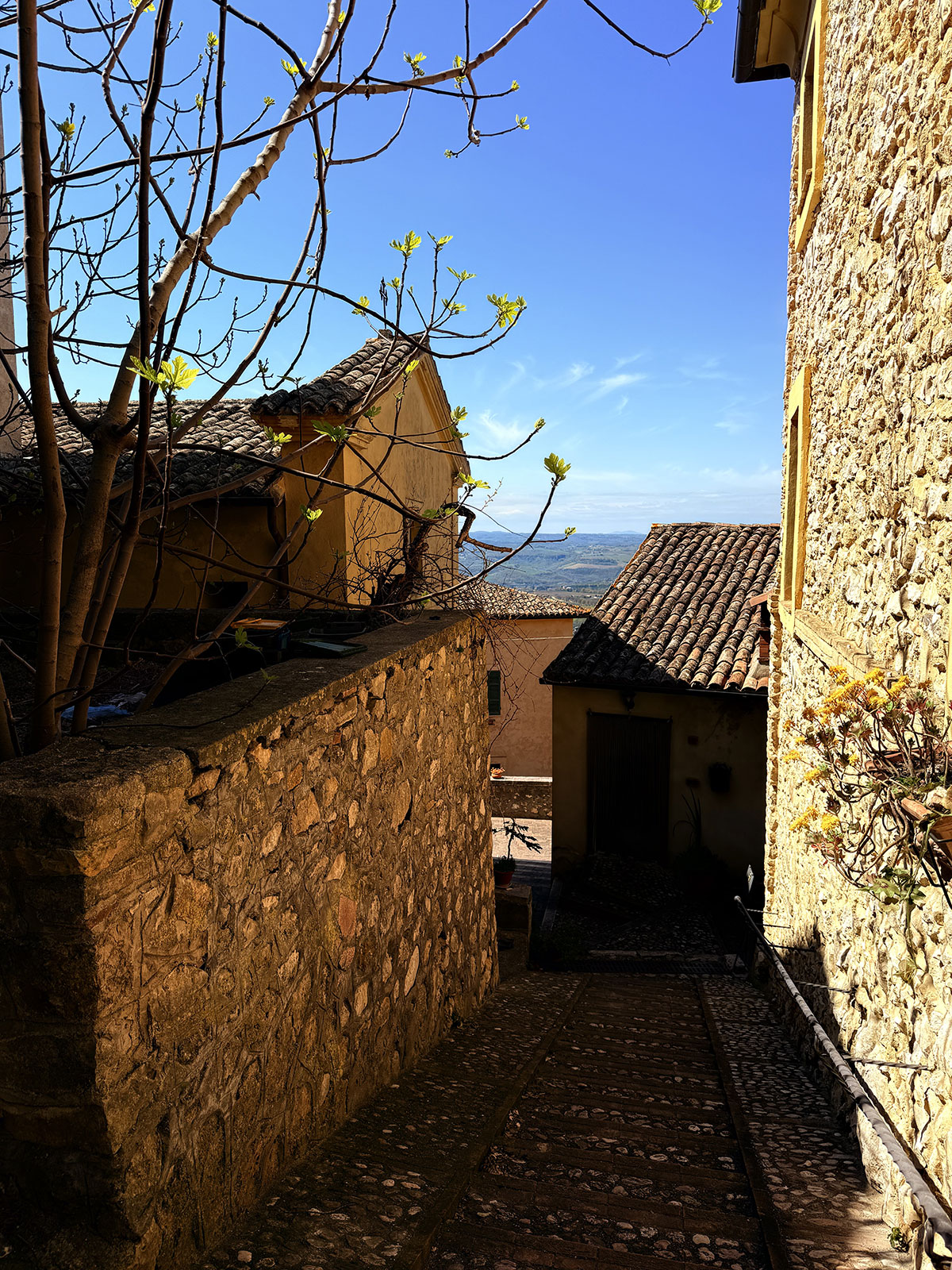
At that point, descending the lane along a characteristic “S”-shaped street, you can return to your starting point while enjoying views of the Palace and the village of Tenaglie.