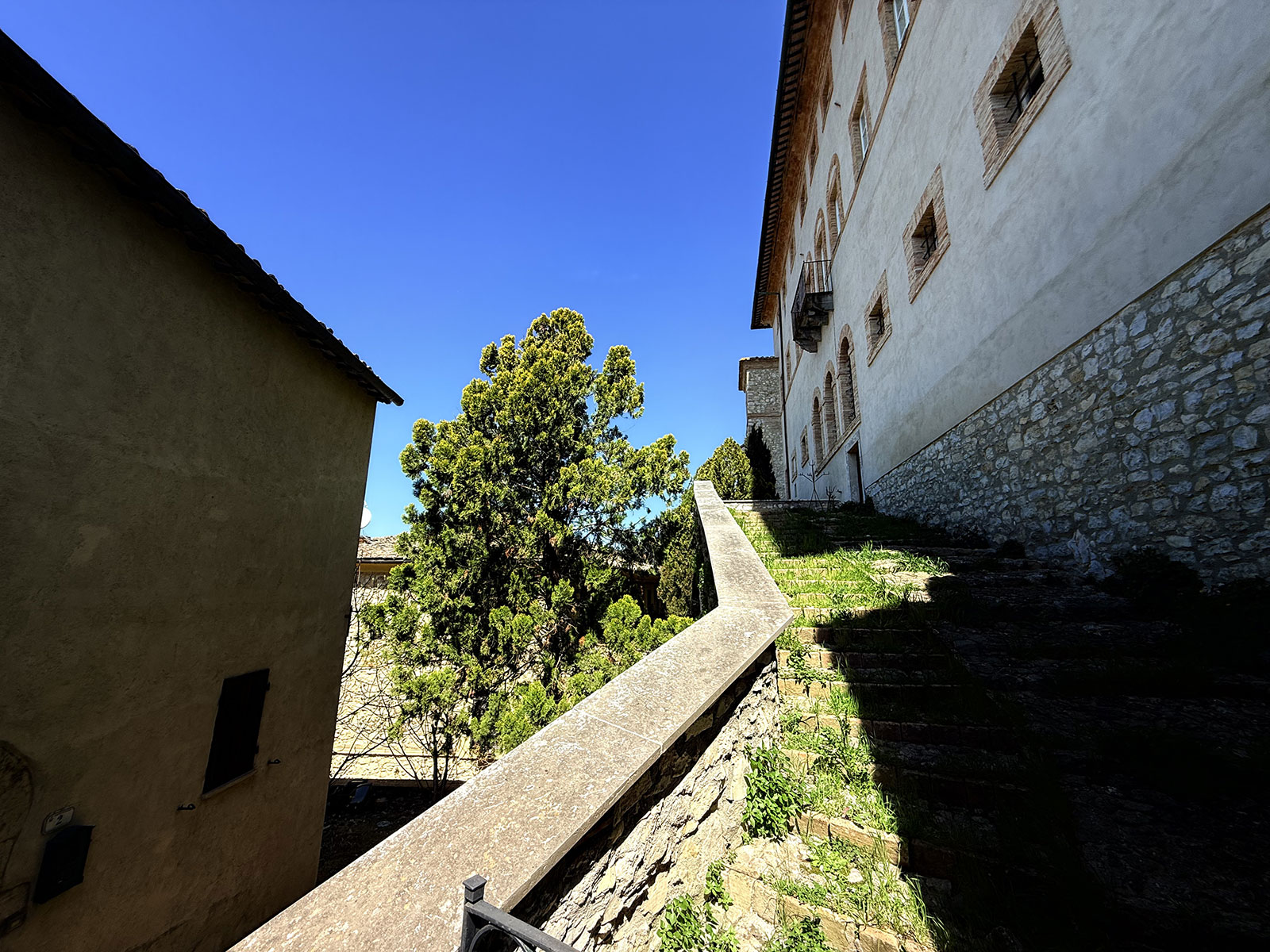
History, origins and identity of an Umbrian noble palace
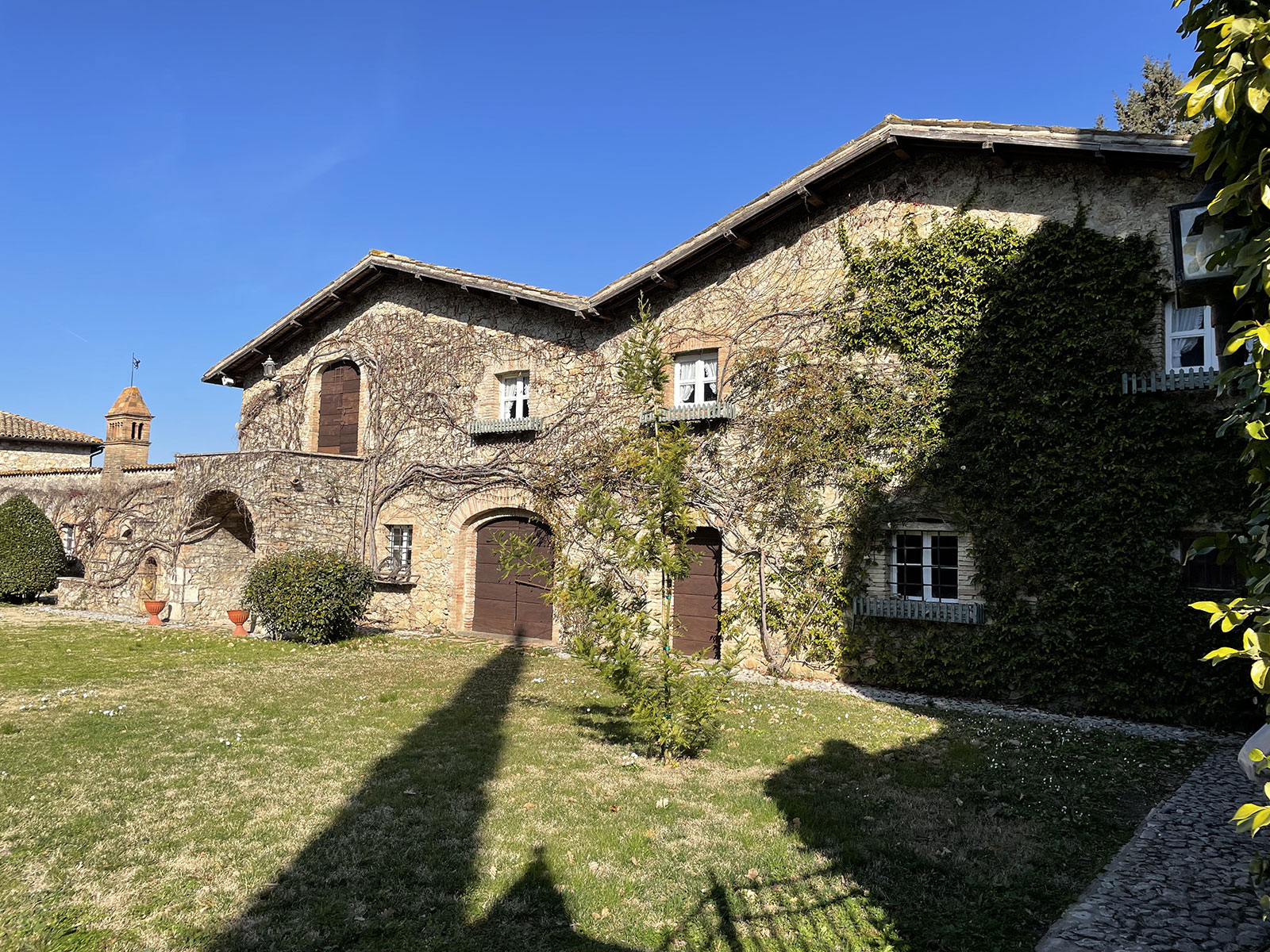
Clinging to the rocky ridge, Palazzo Ancajani preserves the stern profile of a noble residence born from an older fortified soul: a castle built by the Baschi of Carnano. Between the 16th and 18th centuries it became the Ancajani family’s “upper house”: a place of power and outlooks, designed to dominate the village and express its rank.
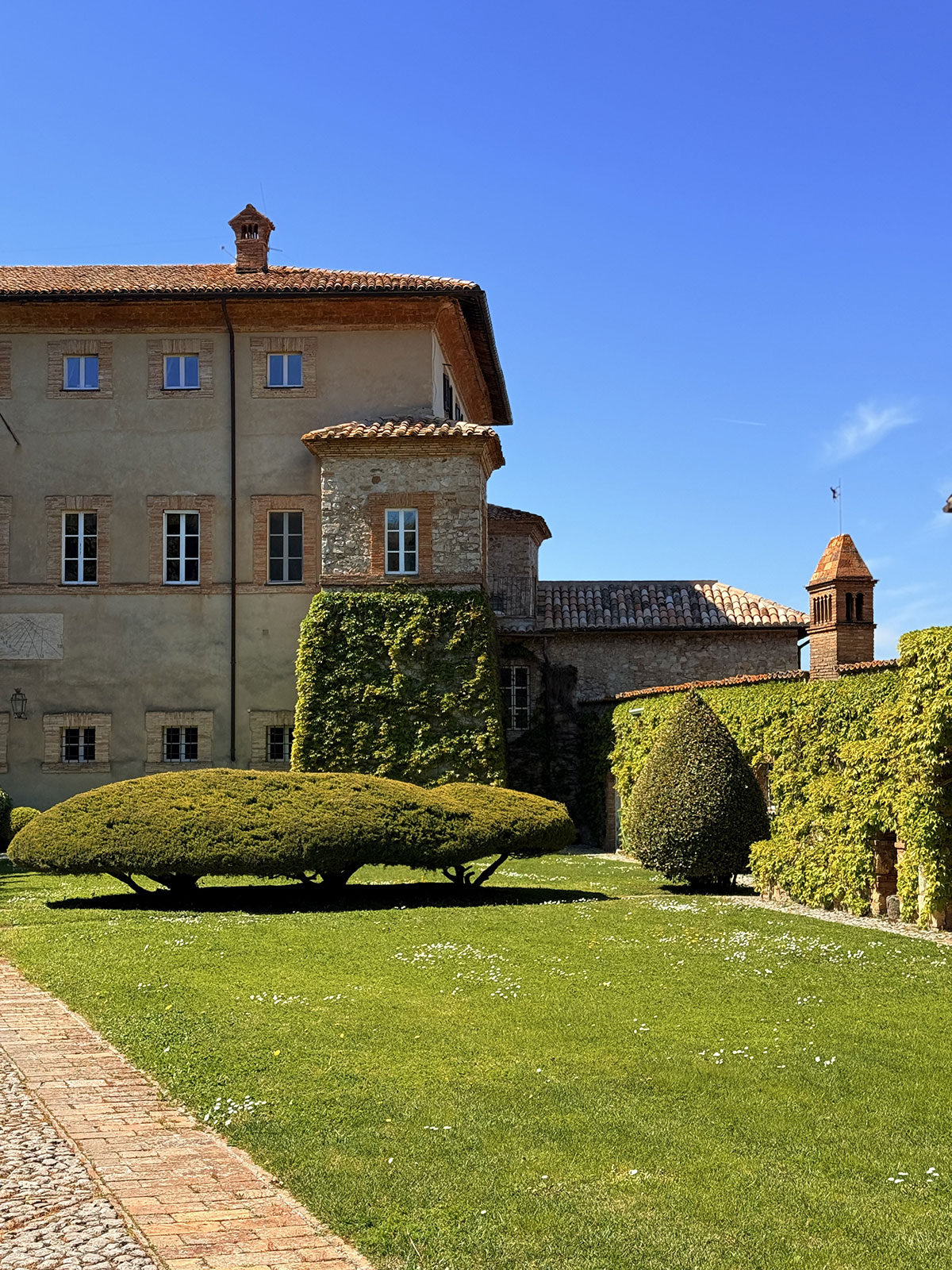
In the 18th century, the Knight of St. John Filippo Ancajani, sergeant major in the Papal army, promoted a major remodelling: the building took on the appearance we see today—a massive rectangular block with four corner towers that still speak of its medieval imprint.
In the 19th century, Baron Decio Ancajani enriched the complex with an Italian-style garden that still introduces the palace front like a theatre set.
Architecture and interiors
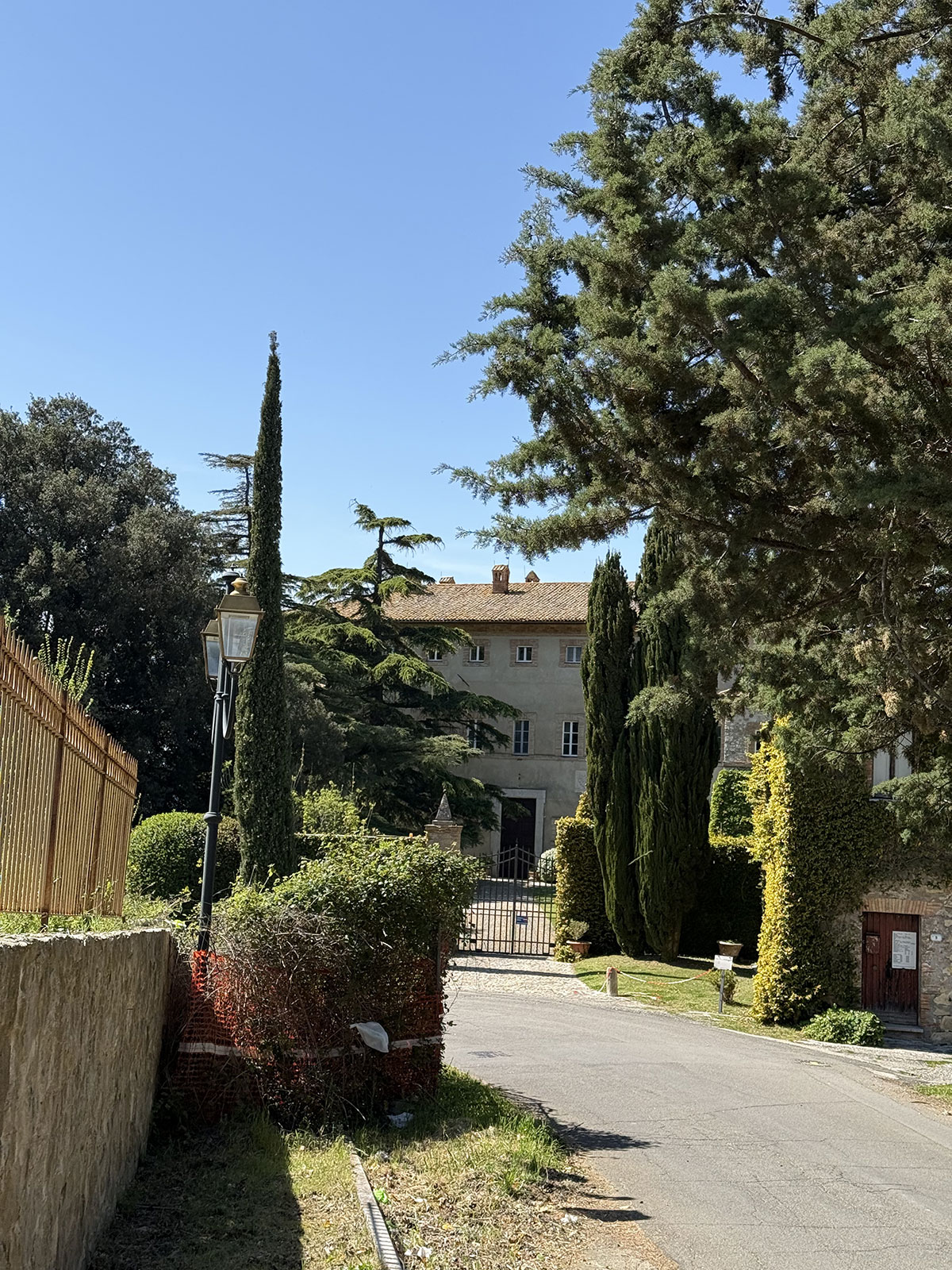
The palace reads as a continuous dialogue between fortress and residence: the rectangular plan binds the four corner towers inherited from the castle; the through carriage entrance (androne) channels movement towards the inner core; the grand staircase rises to the piano nobile, where heraldic memory—family coats of arms—unfolds the lineage’s story.
Outside, the 19th-century Italian garden draws a green threshold that stages the façade and calibrates the relation between architecture and rock.
The palace at a glance
From the medieval fortified nucleus of the Baschi of Carnano (11th–13th centuries) to the Ancajani era (mid-16th century), the complex assumed the character of a major noble residence. In the 18th century, under Filippo Ancajani, the layout we know took shape; in the 19th century, under Decio Ancajani, interiors were completed and the Italian garden was created.
Today the building is private property and is appreciated from the outside along the urban route: please respect places and private property.
Urban trekking
Through Tenaglie’s lanes in search of the sacred
The stairway that leads up to the Palace is the same that guides you to the Church of St John the Baptist, an intimate place of prayer that conveys the ancient spirituality of this small Umbrian village.